

Supporting penguins from Africa to Oceania
July 2026 Conservation Snapshot
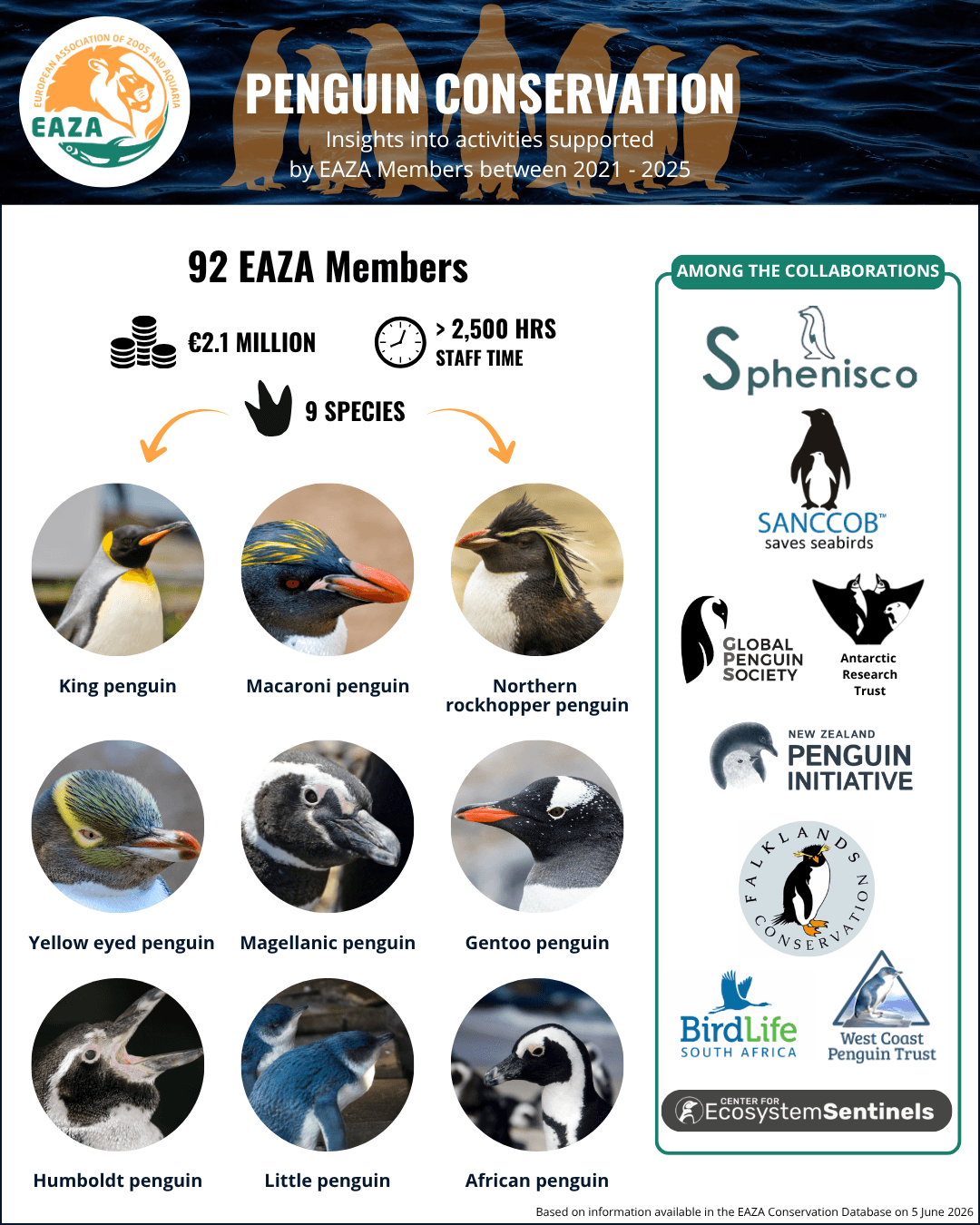
From 2021 - 2025, 92 EAZA Members have supported a wide range of penguin conservation work across Africa, South America, Oceania and the Falkland Islands. The organisations supported by these EAZA Members work towards practical support for African, Humboldt, Magellanic, macaroni, gentoo, king, rockhopper, little and yellow-eyed penguins.
Much of this work focuses on hands-on species recovery: rescuing, rehabilitating and releasing oiled, injured, sick or orphaned seabirds; hand-rearing chicks; monitoring nests and colonies; and improving survival in the wild. Through these organisations, Members also support habitat protection, including the creation and management of marine reserves, safeguarding breeding sites and purchasing or protecting important island habitats.
Research is another strong theme, ranging from satellite tracking and colony counts to studies on genetics, disease, stress, pollution, moulting and acoustic monitoring. Several projects also invest in conservation education, community engagement, school resources, awareness raising and advocacy to reduce threats such as disturbance, fisheries impacts, pollution, invasive species, climate change and habitat loss.
The most frequently supported organisations include SANCCOB, which implements several African penguin projects focused on rescue, rehabilitation, chick bolstering, colony protection and ranger support in South Africa, and Sphenisco, focuses on Humboldt penguin conservation in Chile and Peru through habitat protection, education, advocacy, research and fundraising. Other recurring or prominent partners include the Antarctic Research Trust and Falklands Conservation, which support penguin monitoring, habitat protection and practical conservation work in the South Atlantic, as well as the Global Penguin Society and New Zealand-based penguin organisations working on monitoring, education and local species recovery.
Alongside promoting the support of field conservation to EAZA Members, the EAZA Penguin Taxon Advisory Group, the African penguin EAZA Ex situ Programme and the EAZA Biobank are also supporting work to keep important biological samples safe for future conservation work. A new practical handbook has become available for EAZA Members, developed by Paweł Borecki of Wrocław Zoo as part of his doctoral research on African penguins, where he shares lessons from this work. The handbook explains, step by step, how organisations can plan similar projects, from collecting and storing samples to using them in future conservation work.
The development of this handbook shows why cooperation is so important. Zoos, aquariums, research institutions and conservation organisations all have a role to play in making sure they can support penguin conservation and research in the years ahead. By sharing knowledge and working together across countries, the EAZA community can help both current and future efforts to protect penguins.
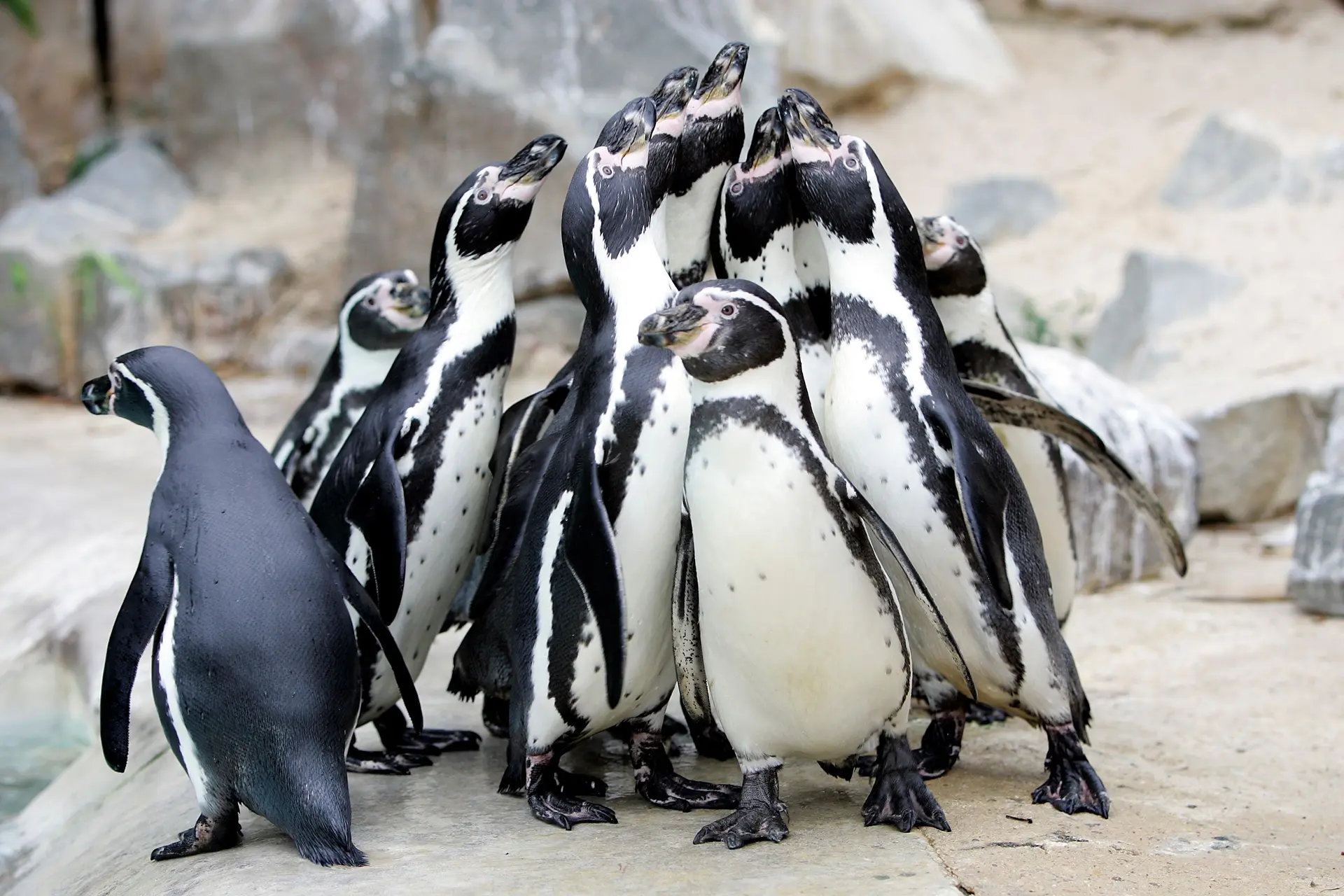
Banner picture © Zoo de la Flèche