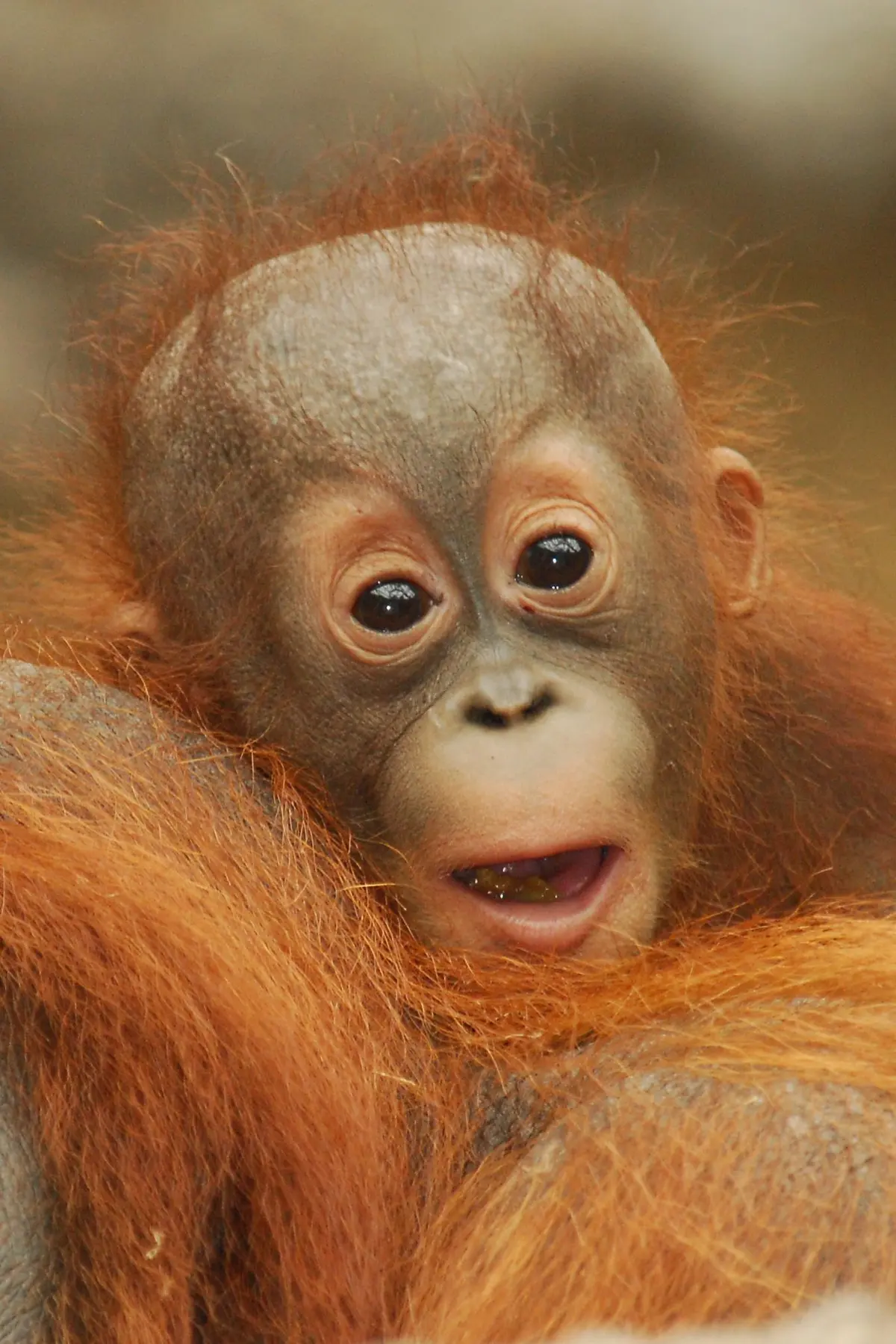

Orangutan
(Pongo abelii, Pongo pygmaeus, and Pongo sp. hybrids)
EEP Coordinator: Simone Schehka, Allwetterzoo Münster
Vice Coordinators: Neil Bemment, Parc Zoològic de Barcelona & Miriam Göbel, Zoo Zurich
The EEP oversees any hybrids with the intention to phase these out/replace them with Sumatran or Bornean orangutans
EEP page - Orangutan
Coordinators and Partners




















What are the EEP roles?

| Conservation education | Housing orangutans in environments and social settings that enable species‑typical behavior allows EAZA zoos to engage visitors with meaningful conservation messages. Through interpretation and outreach, the program highlights the threats faced by orangutans in the wild and promotes responsible consumer choices such as sustainable palm oil and sustainable timber. While these contributions represent only one element of the global conservation effort, they play an important role in shaping public awareness and support for orangutan protection. |
| Fundraising | EEP institutions are encouraged to support conservation initiatives in orangutan range states through fundraising and partnerships with field organisations. Although the financial contribution from zoos represents only a small portion of the overall conservation funding required for orangutans, these efforts remain valuable in supporting selected projects and maintaining long‑term engagement with conservation actions. |
| Research | The Great Ape TAG encourages institutions holding orangutans to participate in research that directly benefits orangutan conservation and welfare. Studies conducted with the ex situ population can provide valuable information on behavior, cognition, health, genetics and management, thereby helping to inform both zoo husbandry and conservation strategies for wild populations. We facilitate behavioral, veterinary and genetic research benefiting orangutan conservation and welfare. |
| Insurance | A key objective of the EEP is to maintain sustainable and genetically well-managed ex situ populations of both Sumatran and Bornean orangutans, explicitly recognizing that two distinct species are managed within the program and that both represent potential insurance populations. These managed populations may function as a long-term safeguard should individuals or genetic diversity ever be required for future conservation actions. Maintaining demographically stable and behaviorally competent populations of both species therefore represents an important precautionary component of orangutan conservation. |
| Capacity building | The program also promotes the sharing of husbandry knowledge, management experience and research expertise with partners outside the EAZA region, including other zoo programs, rescue centers and conservation facilities. By disseminating best practices and maintaining high welfare standards, the EEP contributes to the development of expertise for orangutan management globally. |

| Conservation education | Keeping Bornean orangutans in enclosures and social group compositions that meet the needs of the taxon and encourage behaviours typical for the species provides an opportunity to engage the public with education and awareness about orangutans and conservation. For the indirect conservation education role, the Bornean orangutan can be used to help their counterparts in the wild and convey broader conservation messages. As a charismatic species with which people can easily empathise, the orangutan has great potential for engaging visitors with strong conservation messages and addressing their conscience. Many important messages could be relevant here, including encouraging behavioural change of resource consumers and putting pressures to companies, making people aware of certified ecotourism, etc. As such, this EEP is thought to be able to provide a considerable contribution to conservation. |
| Capacity Building | Considering the status and charisma of the orangutan, the Great Ape TAG feels the EEP is well-suited to encourage local, zoo-focused and higher-level lobbying activities using the orangutan as a flagship species. The EEP has connections to the right people to identify topics for which lobbying is quickly needed to achieve a certain conservation outcome. The lobbying itself is expected to be generally done on a broader level in EAZA or by specific people such as EAZA’s EU Policy staff. |

| Conservation Education (Biology) | Keeping Bornean orangutans in enclosures that meet the needs of the taxon and encourage behaviours typical for the species provides an opportunity to engage the public with education and awareness about orangutans and conservation. For the non-conservation education role, the Bornean orangutan can be used to convey broader messages, such as general biological education and (re)connecting people to nature, for many reasons, including the species’ close relatedness (and differences) to humans. |
| Research (Basic and Applied) | The Great Ape TAG encourages orangutan holders to proactively contribute to research activities on orangutan husbandry and welfare, as well as on cognition, behaviour and morphology related to human evolution. |
EEP in numbers
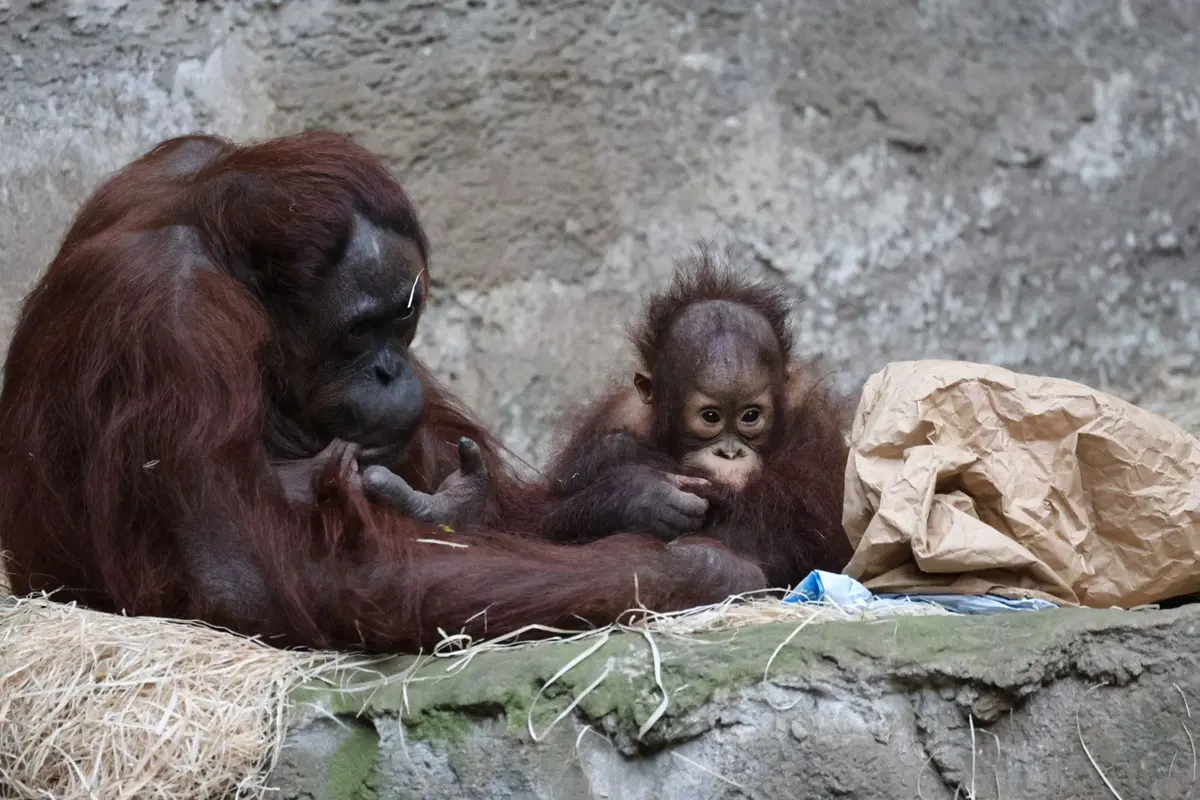
In April 2026 the Orangutan EEP had 68 holders with:
- Bornean orangutan 152 animals
- Sumatran orangutan 142 animals


Programme highlights
- There is an ongoing Orangutan Conservation Genetics Project that the EEP actively supports. More information can be found here.
- The EEP is increasing long term colaboration with international research institutions, e.g. Max Planck Institute of Animal Behavior (Germany) ,Universitas Nasional (Indonesia), Institut Pertanian Bogor (Indonesia), Rutgers University (USA). These collaborations support long-term research on orangutan behavior, ecology, health and genetics, and contribute to global conservation strategies under the One Plan Approach.
The EEP is also heavily involved in various research projects that support animal welfare, husbandry and conservation:
- Major ongoing project: Orangutan Conservation Genetics Project – led by Dr. Graham Banes (Banes et al. 2020; Banes et al. 2022; Fountain et al. 2021). This global initiative investigates the taxonomic composition, genetic diversity and health-related genetics of orangutans in zoo populations, rehabilitation centres and wild populations.
- The Great Ape Heart Project is a global collaborative initiative based at Zoo Atlanta investigating cardiovascular disease, one of the leading causes of mortality in great apes in human care
- Tinder for Orangutans project (Roth, T. S. (2024, March 13). Tinder for orang-utans: comparing sexually selective cognition among Bornean orang-utans (Pongo pygmaeus) and humans (Homo sapiens). This project uses touchscreen and eye-tracking technology to investigate mate choice and sexual selection in orangutans, aiming to improve breeding success in managed populations
- Vitamin D status in zoo-housed great apes (Moittié, S., Jarvis, R., Bandelow, S. et al. Vitamin D status in chimpanzees in human care: a Europe wide study. Sci Rep 12, 17625 (2022). Vitamin D deficiency is widespread in zoo-housed great apes and may contribute to major health issues such as cardiovascular disease, highlighting the importance of standardized monitoring and husbandry adjustments.
- Socioecological conditions and communicative repertoire in orangutans These projects focuses on research on socioecological influences on communication and behavioral repertoires in orangutans