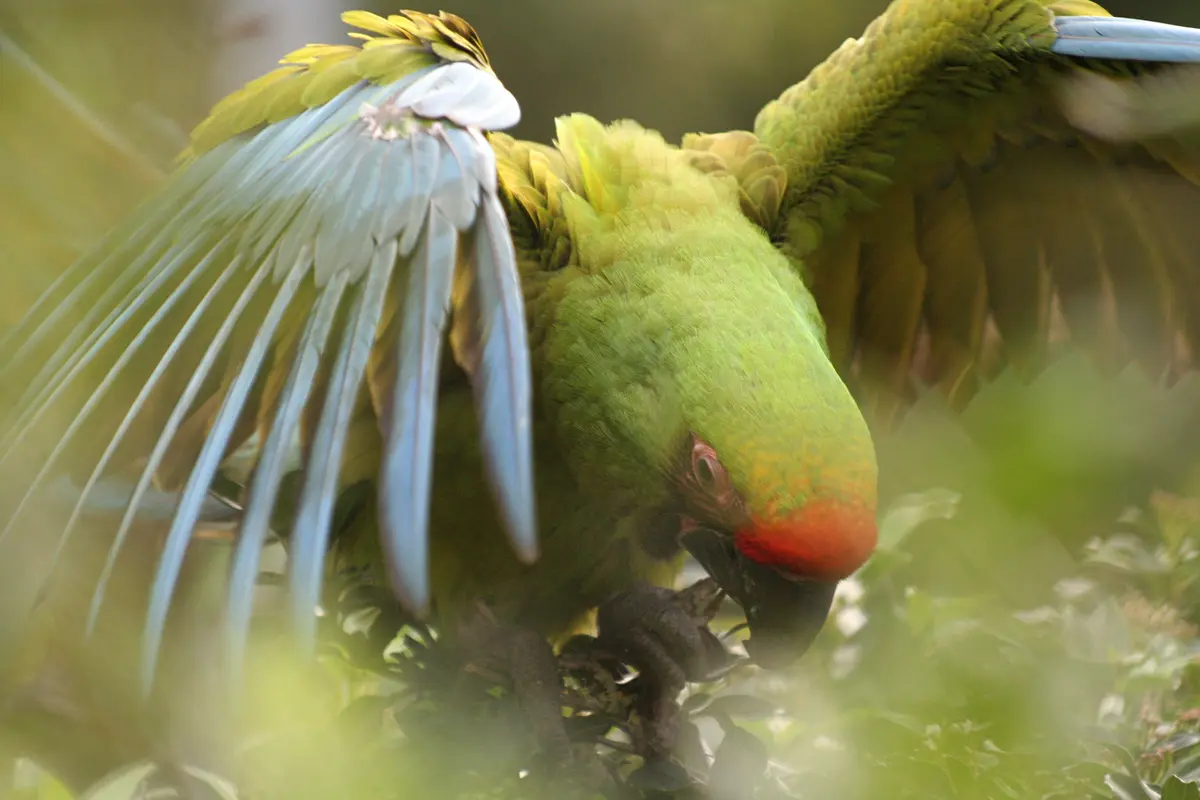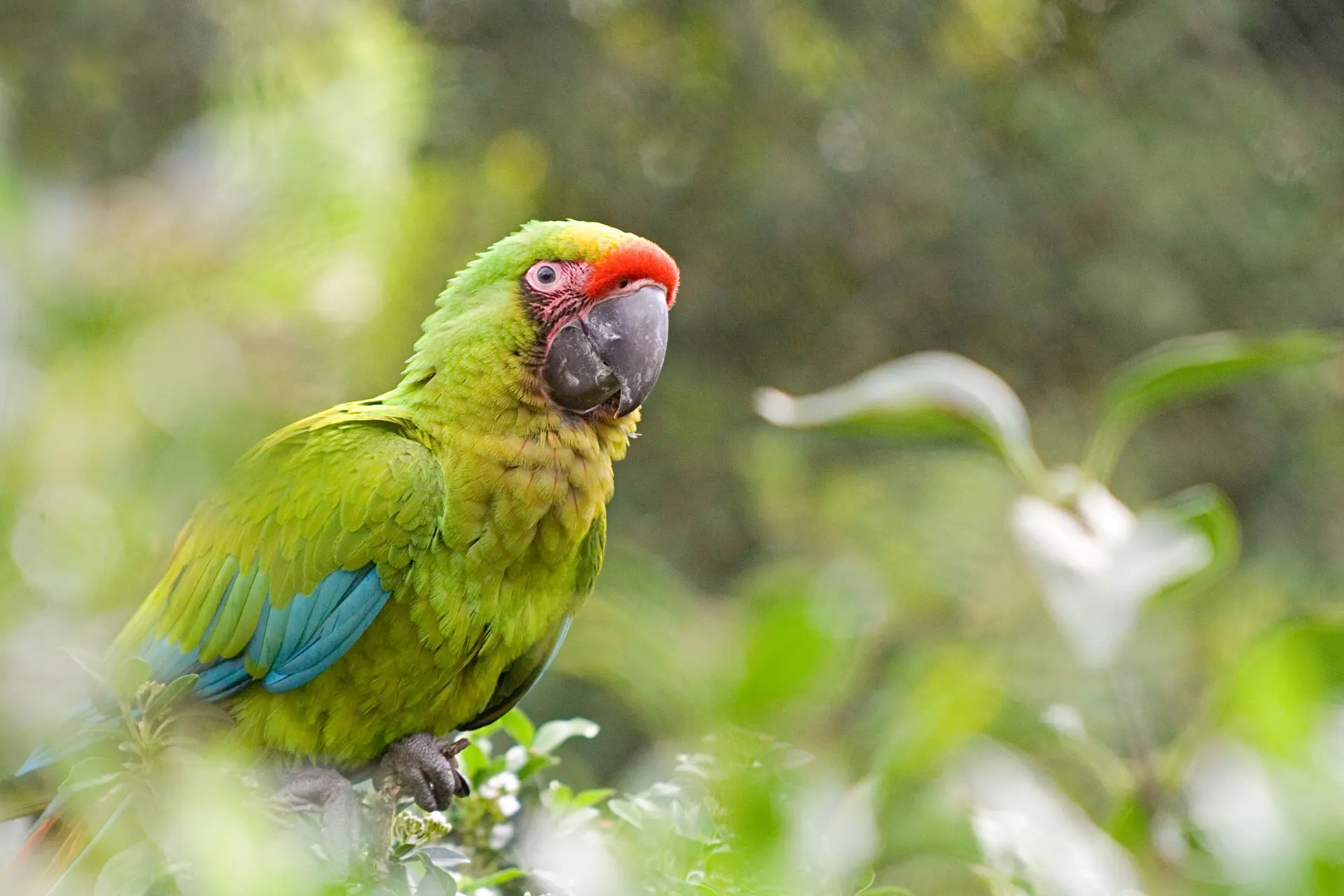

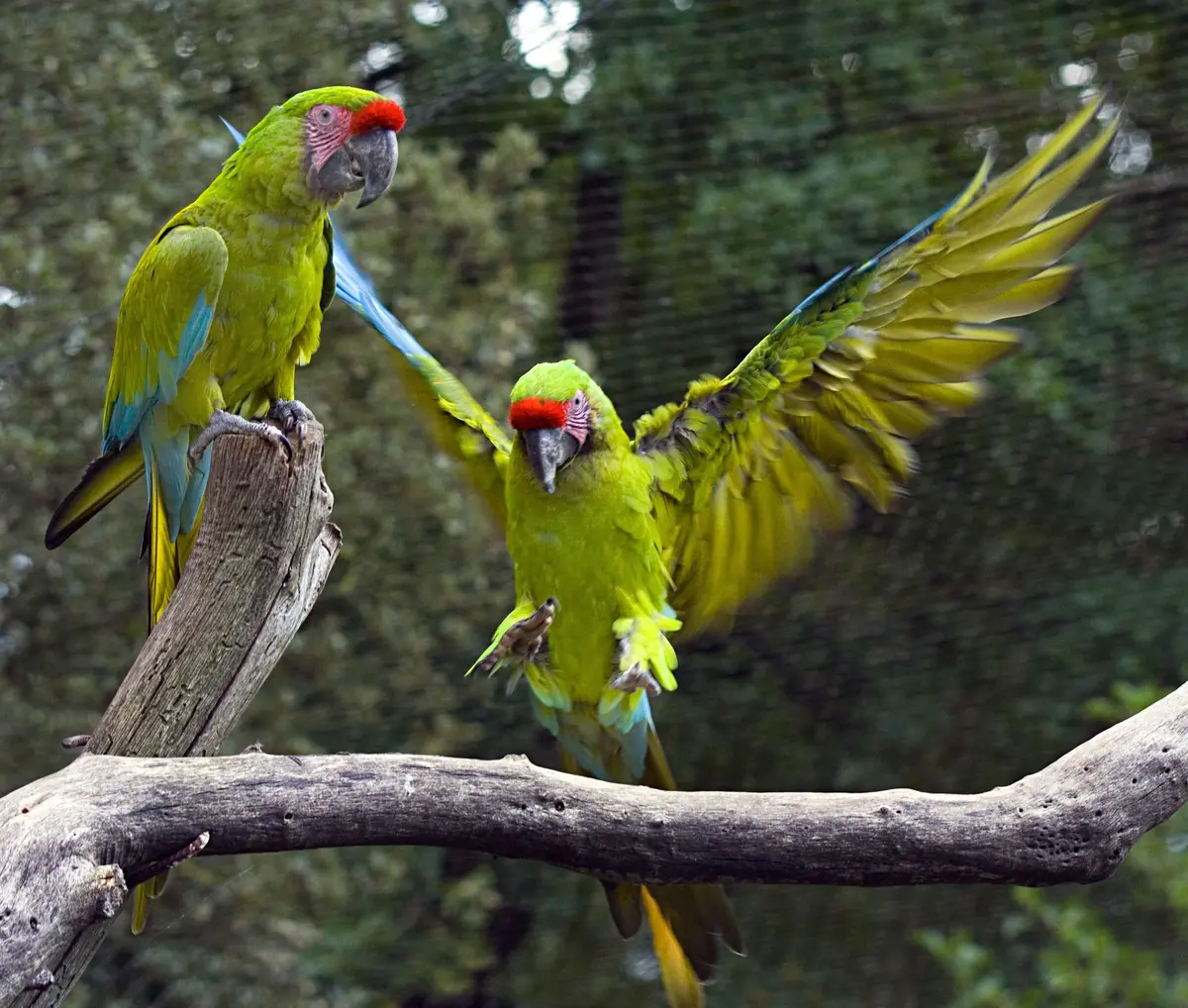
Great green macaw
(Ara ambiguus)
EEP Coordinator: Sandrine Silhol, Zoo des Sables
EEP page - Great green macaw
Coordinators and Partners









What are the EEP roles?
| Insurance | This role involves genetic and demographic management to establish a long-term ex situ population for conservation purposes. Currently, suitable holders for the species are limited, and efforts are needed to increase the number of holders, including in other regions such as ALPZA. The Macaw Working Group can provide valuable assistance in this regard. Ongoing genetic work is essential to ensure the genetic integrity of the population. While the space for the species exists, challenges need to be addressed, including competition with larger macaw species. Additionally, there is a need to investigate the genetics and taxonomy of the animals in zoos, as hybridization between different populations and even with A. militaris may be occurring. Establishing an ex situ population provides a potential source for demographic and genetic supplementation if the wild population declines. |
| Genetic research (in situ) | This role focuses on studying the genetics of the species in the wild. It is essential to define the scope of the genetic work and ensure compliance with the Nagoya Protocol to minimize any associated risks. However, the feasibility of this research is considered medium due to the challenges posed by the Nagoya Protocol and the potential need to establish research facilities within the country. To support this research, connections to genetic labs within the EAZA network can be utilized, including involvement with the EAZA Biobank. A potential research project could involve a student examining genetic diversity and comparing populations in situ and ex situ. This research aligns with the genetic diversity studies conducted for Ara glaucogularis and can leverage the resources available in the biobank. |
| Conservation education | This role requires active engagement with the Education committee to develop and implement educational initiatives. The focus is on educating the local audience within the species' range. Technical assistance should be provided to local projects to enhance their effectiveness. It is important to incorporate an evaluation component to assess the efficiency and impact of the education programs and materials. By involving the Education committee and emphasizing evaluation, the conservation education efforts can be tailored to effectively raise awareness and promote the conservation of Ara ambiguus in its native habitat. |
| Capacity building | This role entails networking with local stakeholders to facilitate the sharing of knowledge and expertise. By establishing connections with these stakeholders, valuable insights and practices can be exchanged, overcoming cultural and language barriers. The focus is on sharing knowledge related to husbandry techniques and information about ongoing conservation projects. Additionally, efforts should be made to collaborate with the Conservation Planning Specialist Group (CPSG) and bring together various organizations working towards the conservation of Ara ambiguus. |
| Fundraising | The focus of this role is to develop a small fund scheme that specifically targets land protection and reforestation through land purchase, which may be pursued by other stakeholders. In addition, the small funds would be allocated to support various activities such as research initiatives. These funds would play a crucial role in financing important projects like the census, and the outcomes of these projects can contribute to the development of protocols for research, sampling, and conducting future censuses, ultimately aiding in the overall conservation efforts for Ara ambiguus. |
| Research (ex situ) | Conducting a comprehensive census of the captive population is essential to gather accurate population data and monitor individual birds. Additionally, bioacoustic studies can provide valuable insights into the vocalizations of Ara ambiguus, allowing for a better understanding of their communication patterns and behaviour. Another important aspect is the development of tools and techniques that can be applied in field research, enabling researchers to collect data and monitor wild populations effectively. However, it is important to consider the potential risk that captive birds may develop distinct vocalizations that differ from their wild counterparts, which should be taken into account when analysing and interpreting bioacoustic data. |
| Conservation education | This role aims to raise awareness about the species and its habitat dependencies. This involves highlighting the close relationship between the macaws and the tree species they rely on for food and nesting sites. Emphasizing the threats posed by logging activities and the conversion of land for pineapple plantations can help educate the public about the importance of preserving these habitats. While the benefit of conservation education for Ara ambiguus is rated as medium compared to other roles, it remains a crucial aspect in fostering a deeperunderstanding of the species and encouraging actions to mitigate habitat loss and protect the macaws' natural environment. |
EEP in numbers


Programme highlights
Great green macaw conservation project in Ecuador: The Great green macaw (Ara ambiguus) is one of the most endangered species in the world. The Ecuadorian subspecies (A.a. guayaquilensis), which lives exclusively in the tropical dry forest, is listed as Critically Endangered, with only 37 individuals remaining in the wild, including 25 in Las Balsas reserve.
Project Objectives
• Safeguard the Ecuadorian population of Great green macaw.
• Increase population size through regular releases.
• Protect and restore the tropical dry forest habitat.
• Improve scientific knowledge on the genetics and distribution of the subspecies to guide future releases.
Project Partners
• Fundación Jocotoco: manages the reserve, oversees releases, and monitors birds in the wild.
• Jambelí Foundation : breeds macaws in captivity using individuals confiscated by customs; prepares young birds for release.
Key Actions
• Captive breeding in specialized facilities.
• Full veterinary checks, banding, and fitting of transmitters on birds selected for release.
• Acclimatization in forest aviaries, equipped with fruiting trees to teach natural foraging.
• Progressive releases into the Las Balsas reserve.
• Field monitoring of wild groups and released birds.
• Habitat protection, reforestation, and acquisition of new forest parcels.
Results to Date
• 23 Buffon’s Macaws released since 2017.
• A new two-year-old macaw released on October 1st, 2025.
• Five nests identified in the reserve, including two active ones.
• Positive interactions between released birds and the existing wild group.
• Coexistence with another threatened parrot, the Lilacine Amazon, of which only about 4,200 individuals remain.
Future Perspectives
• Continued releases in the coming years.
• Development of genetic tools to select the best candidates.
• Expansion of protected areas and reinforcement of ecological monitoring.
• Stronger international collaboration to secure the long-term survival of the species.