

Securing the Bongo's Future in Kenya
Mountain bongo repatriation to strengthen Kenya’s breeding and rewilding efforts
Amsterdam, 30 March 2026
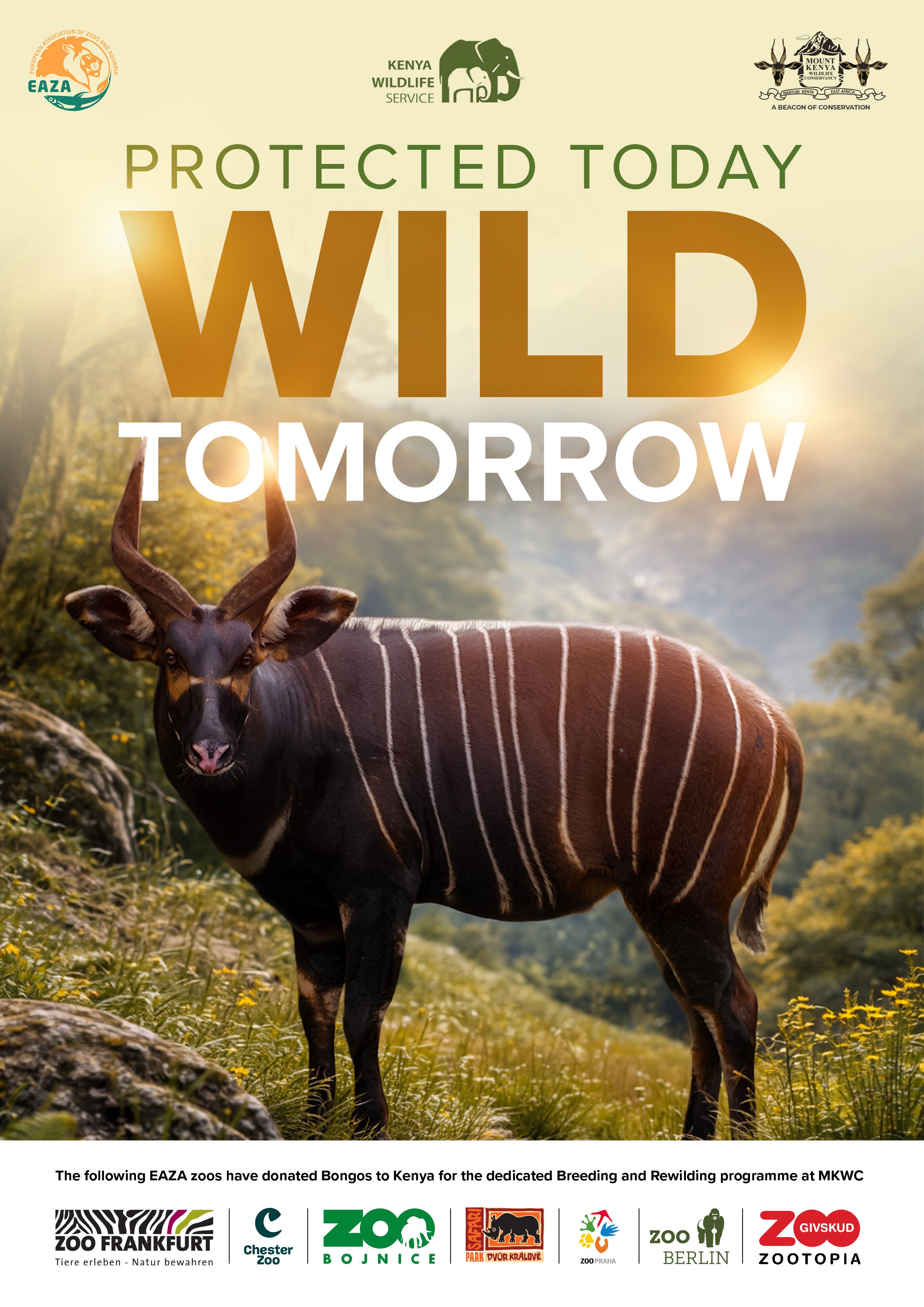
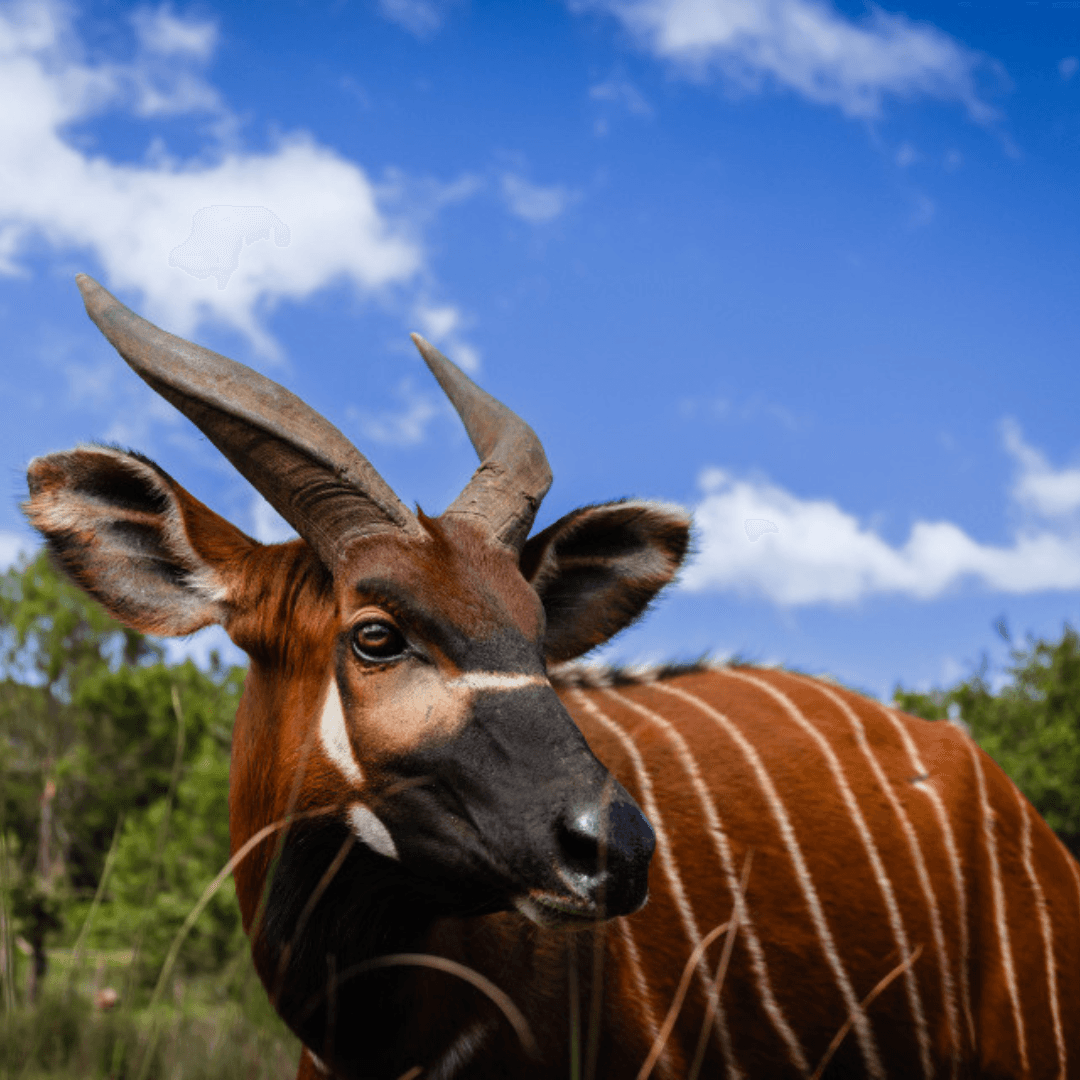
Four male mountain bongos (Tragelaphus eurycerus isaaci), one of the world’s most endangered antelopes, are being prepared for repatriation to Kenya from the EAZA Ex situ Programme (EEP).
The EEP manages a healthy and genetically robust population of mountain bongos across 47 accredited European zoos. The males will contribute to increased genetic diversity and reproductive capacity, supporting a generation of viable offspring for future rewilding initiatives.
The project is implemented under EAZA's auspices by Safari Park Dvůr Králové (Czechia). The males were selected from: Prague Zoo (Czechia), Givskud Zoo (Denmark), Frankfurt Zoo and Tierpark Berlin (Germany) and National Zoo Bojnice (Slovakia). Their science-based selection was conducted by the EEP Coordinator based at Chester Zoo (UK) and the Species Committee.
This transfer reflects years of coordinated genetic and demographic planning within the EEP.The animals have been chosen to maximise genetic value for mountain bongo recovery in Kenya, while maintaining a stable and sustainable population in Europe. Animal welfare and veterinary safeguards guide every step from health screening and quarantine to specialist transport planning and post-arrival care. The initiative is also a strong example of deliberate, population-level coordination between European and Kenyan partners. It demonstrates how well-managed animal populations in human care can support species recovery outcomes on the ground.
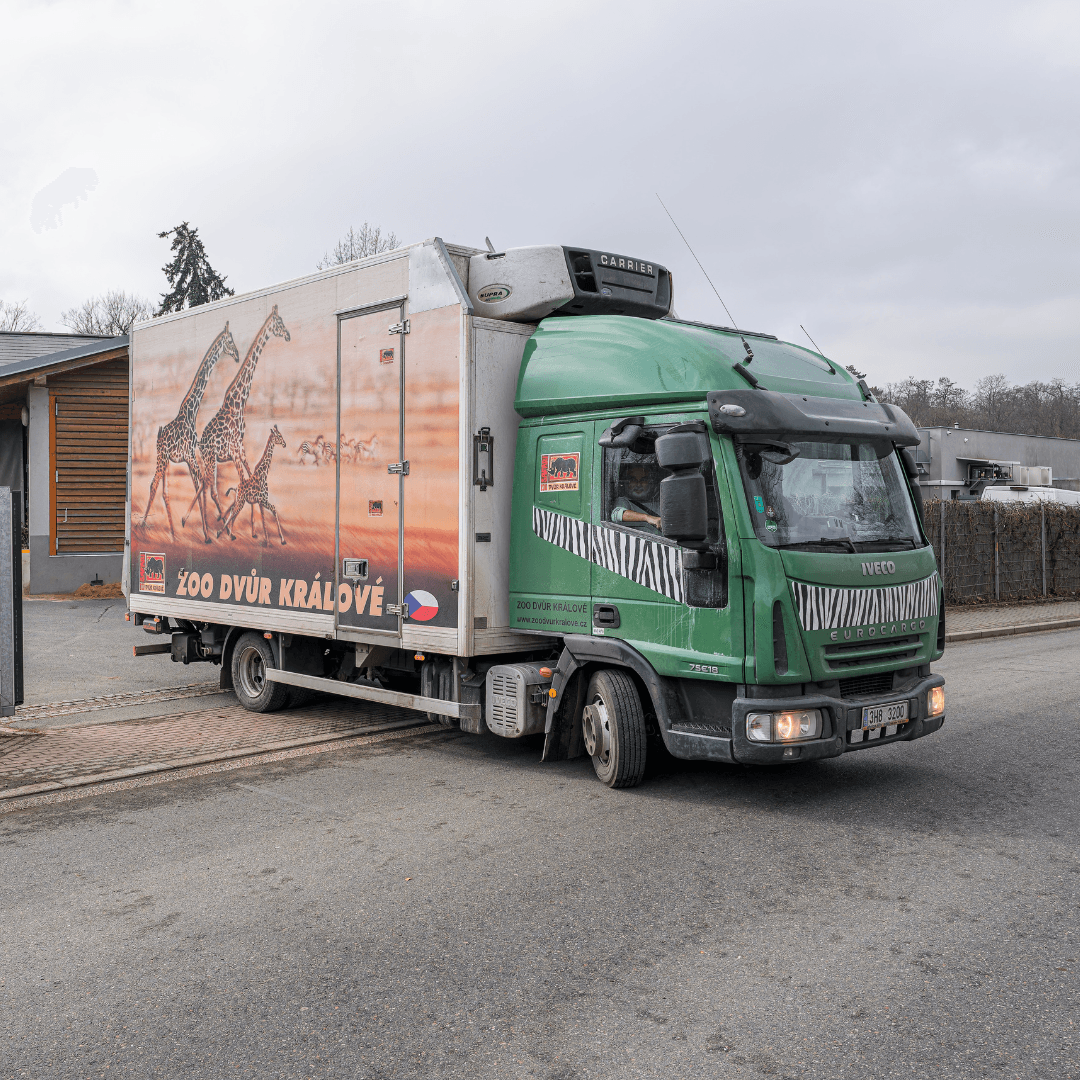
Veterinary preparation for the repatriation has been extensive and precautionary. Each animal is undergoing comprehensive disease screening in line with import requirements from the Directorate of Veterinary Services, Kenya, with a strictly prescribed quarantine period, during which they will be subjected to extra health assessment prior to shipment.
The quarantine period is taking place at Safari Park Dvůr Králové, an EAZA Member with an internationally approved export quarantine facility and long-standing experience in transporting large ungulates to Africa.
Throughout the process, veterinary oversight will be provided in collaboration with European and Kenyan regulatory authorities. Upon landing in Nairobi, the bongos will be formally received by the Kenya Wildlife Service (KWS) and transported under veterinary supervision to Mount Kenya Wildlife Conservancy (MKWC).
This project demonstrates Kenya’s strong commitment to implementing globally recognized best practices in species recovery and wildlife conservation. Through close collaboration with the EEP and other conservation partners, the repatriation is guided by rigorous biosecurity protocols, science-based population management, and sustained habitat restoration and protection. This integrated and strategic approach strengthens national efforts to restore viable, self-sustaining populations of the mountain bongo. As a species endemic to Kenya and of significant national conservation value, the successful recovery of the mountain bongo remains a key priority under KWS’s broader species recovery and biodiversity conservation agenda.
At MKWC, each animal will undergo a period of close post-transport monitoring and acclimatisation before being gradually integrated into the conservancy’s established breeding programme. The males will strengthen the genetic diversity and increase breeding potential, supporting the production of healthy offspring suitable for future rewilding.
These males are a critical component of our rewilding programme. Having reached the milestone of 100 mountain bongos at Mount Kenya Wildlife Conservancy, our focus now is on sustained growth, in line with the long-term national target of establishing at least 750 individuals by 2050. The introduction of these genetically valuable males will strengthen our breeding structure, accelerate population growth, and play an essential role in building a resilient bongo population capable of supporting rewilding and long-term recovery in Kenya’s forests.
This repatriation exemplifies international collaboration at its best, linking world-class ex situ management with long-term, science-based recovery of one of Africa’s most threatened antelopes.
Stay tuned for updates about this exciting project as the animals travel to Kenya later this spring.
Partner quotes
Chester Zoo
Dr Nick Davis, Mountain Bongo EEP Coordinator
“This is a truly historic moment for mountain bongo conservation in Africa and for the European zoos that have worked tirelessly to safeguard the species. The mountain bongo is one of Africa’s rarest large mammals and, with fewer than 100 thought to remain in the wild, they are perilously close to extinction in the wild.
Thankfully though, the species is thriving in conservation zoos across Europe, with a number of important births in recent years helping to build a healthy, genetically strong population. As a result, four males have been carefully selected based on their age, health and important genetics to provide a vital lifeline and help boost numbers at the Mount Kenya Wildlife Conservancy.
Collaborations like this are essential if we are to prevent this magnificent species disappearing altogether. They demonstrate how modern, science-led zoos play an important role in bringing species back from the brink - and the future of the mountain bongo may now be much brighter because of it."
Safari Park Dvůr Králové
Jan Stejskal, Director of International Projects
“First mountain bongos were imported to Safari Park Dvůr Králové directly from Kenya by the park’s former director Josef Vágner. Since the early 1970s, more than 110 calves have been born in the park, and all males selected for this repatriation carry those Dvůr Králové bloodlines rooting back to Africa. Symbolically, they are returning home after more than half a century.
Safari Park has been developing its activities in Kenya for a long time. Its experience is one of the reasons why it was entrusted with organising such a significant transfer, but an important factor is also the existence of a specialised quarantine facility built for similar purposes. With the return of bongos to Kenya, Safari Park continues to fulfill its mission to build bridges between ex situ and in situ conservation. Future for many endangered species lies in wider cooperation and this unique collaboration of international conservation partners can serve as a symbol of hope even for other species that are in trouble.”
Frankfurt Zoo
Dr Christina Geiger, Director
“Frankfurt Zoo has been keeping Eastern bongos since 1970. In 1973, the first calf in Europe was born here in Frankfurt – and to date, a total of 29 calves have been born at the zoo.
I am proud that Frankfurt Zoo is playing its part in this important international conservation project. The return of bongos to Kenya demonstrates that the so-called One Plan Approach of the International Union for Conservation of Nature (IUCN) is delivering results. Its aim is to bring all relevant stakeholders to the table – governments, zoos, conservation organisations, and scientists – and to join forces to safeguard biodiversity. In this case, the shared objective is to ensure that bongos once again roam Mount Kenya National Park.”
Prague Zoo
Barbora Dobiášová, Curator of Ungulates
“Prague Zoo has for several years supported not only the habitat reforestation, but also research and monitoring of bongos in collaboration with Mount Kenya Wildlife Conservancy. The relationship between our institutions is now moving to an entirely new level. The current transport of bongos to Kenya is a fantastic demonstration of the true purpose of modern zoological gardens and a reminder that conservation efforts know no national or continental borders. With our visitors, as well as participants in our experience programmes featuring bongos kept in Prague, we can share this powerful story and in doing so generate further support for the protection of these exceptionally charismatic mammals. It is, in many ways, a full-circle moment in which ex situ conservation, in situ conservation and public education come together."
Givskud ZOO
Rasmus Sebastian Nielsen, Director
“The mountain bongo is not only one of the most endangered animals in our zoo, but it is also consistently rated by our visitors as one of the most beautiful and fascinating antelopes. Combined with its remarkable behaviour, this has made the species very popular at Givskud Zoo for many years, among both visitors and staff.
This strategic contribution to this re-population marks a milestone for Givskud Zoo and our conservational efforts. It shows the importance of the One Plan Approach, where both ex situ and in situ conservation works hand in hand to save endangered species. The mountain bongo – a flagship species at Givskud Zoo since 1994 is now returning to the wild in Kenya, this aligns us perfectly with our strategic priority of protecting endangered wildlife.”
National Zoo Bojnice
Andrea Klasová, Spokesperson, Head of Marketing and Education Department
"For us at the National Zoo Bojnice, this is a truly powerful moment – to see an animal born in our care become part of an international effort to return the species back to the wild. It is clear proof that the work of modern zoos has a deeper purpose – not only in caring for animals, but also in actively contributing to their return to their natural habitats. Projects like this give real meaning to our everyday work.”
Zoo and Tierpark Berlin
Christian Kern, Zoological Director
“Bringing animals back from our care to their natural habitat is always a deeply emotional and moving moment for all of us. Berlin Zoo received its first mountain bongos in 1971, many calves were born in various generations and for more than 55 years, dedicated wildlife care experts have worked tirelessly every day to care for and protect this beautiful yet critically endangered antelope.
Zoo Berlin is honoured to be part of an exceptional team of conservationists from various disciplines and cultures, all working hand in hand to support the return of the moutain bongo to Kenya. From our experience with other reintroduction projects, we know that conservation efforts will work, and we wish this initiative every success in bringing the bongo back home.”
Media links
EAZA: website, Facebook, Instagram, LinkedIn
Chester Zoo: website, Facebook, Instagram, Tik Tok, LinkedIn
Safari Park Dvůr Králové: website, Facebook, Instagram
Prague Zoo: website, Facebook (general zoo and conservation account), Instagram (general zoo and conservation account)
Givskud Zoo – Zootopia: website, Facebook, Instagram, LinkedIn
Zoo Berlin: website, Facebook, Instagram, Tik Tok, LinkedIn
Zoo Bojnice: website, Facebook, Instagram
Kenya Wildlife Service: website, Facebook, Instagram, LinkedIn
Mount Kenya Wildlife Conservancy: website, Facebook, Instagram, LinkedIn