

Safeguarding Lake Natron: a critical site for lesser flamingos
To celebrate World Wetlands Day and the launch of the EAZA Wetlands for Life Conservation Campaign, this Conservation Snapshot is dedicated to the first pre-selected campaign project!
February 2026 Conservation Snapshot
During the EAZA Wetlands for Life Conservation Campaign (2026 - 2027) participants will raise funds for a selection of conservation projects that focus on wetland threats and solutions in the five regions where flamingos occur. The conservation activities funded need to genuinely benefit wetlands needed by flamingos, other fauna and their human communities.
Project #1: Securing Lake Natron’s Ecological Integrity Through Community-Led Conservation
Ironically, the most numerous of the world’s six flamingo species is also among the most vulnerable to the loss of nesting habitat. An estimated 75% of the global population of lesser flamingos (2.2–3.3 million individuals) nests in one site: Lake Natron, Tanzania. Protecting this globally significant breeding congregation is considered the single most important conservation measure for the species and will benefit many other wetland species.
The most persistent threat to Lake Natron is the recurring proposal of soda-ash mining, which would disrupt the lake’s hydrology and could severely impact flamingo breeding. Past proposals - including the most recent attempt in 2025 - were withdrawn after intensive campaigning and strong public opposition. However, the lake still lacks complete and permanent protection, meaning the threat remains ever-present. Local community resistance is essential to prevent damaging resource extraction and to keep long-term protection on track.
The first project selected will enable communities in Wosiwosi and Magadini to improve quality of life and livelihoods while strengthening their role as guardians of Lake Natron and its resources. The approach taken builds on proven successes from villages on the western shores of the lake, and the Magadini and Wosiwosi communities are enthusiastic about following similar pathways toward economic and ecological resilience. The project also aims to improve Lake Natron's conservation status to prevent future mining proposals.
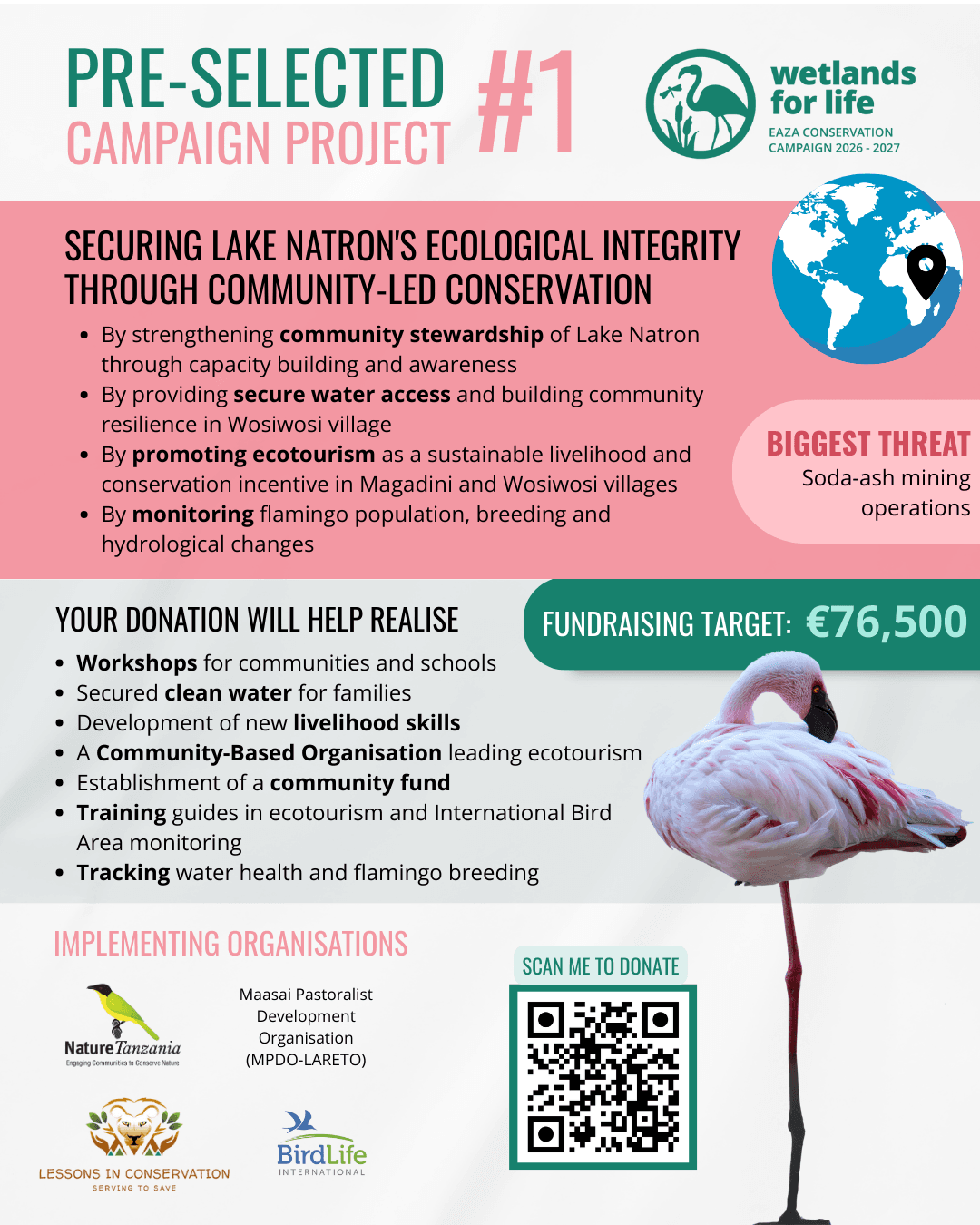
The project will run for 24 months and will be implemented by Nature Tanzania, Maasai Pastoralist Development Organisation (MPDO-LARETO), BirdLife International, and Lessons in Conservation.
The conservation measures align perfectly with important national and international policies, including the Tanzania National Biodiversity Strategy, the Ramsar Convention, and the Convention on Biological Diversity.
Picture: Flamingo nests at Natron Lake © Akshita Dinesh Rabdiya of Nature Tanzania
Blog post by Merel Zimmermann, 2 February 2026