

Arctic Ambassadors
Polar Bears International is the only nonprofit dedicated exclusively to conserving polar bears and the sea-ice habitat they need to survive. Zoos and aquariums are important partners in this mission, supporting research, education, and advocacy that strengthen conservation outcomes for both wild and managed populations. Reflecting this growing collaboration, the International Polar Bear Conference (3–6 February 2026), hosted by Copenhagen Zoo, will showcase the latest knowledge and best practice in polar bear management across zoo and field contexts. You can still register!
January 2026 Conservation Snapshot
Polar Bears International's (PBI) mission is to conserve polar bears and their sea ice through science, media, and by helping people understand the Arctic and take action on key threats, especially climate change. PBI addresses both long-term pressures such as rapid sea-ice loss and immediate challenges including industrial activity, den disturbances, and increasing human-bear conflict, with the goal of securing polar bears for future generations through emissions reductions and stronger conservation management.
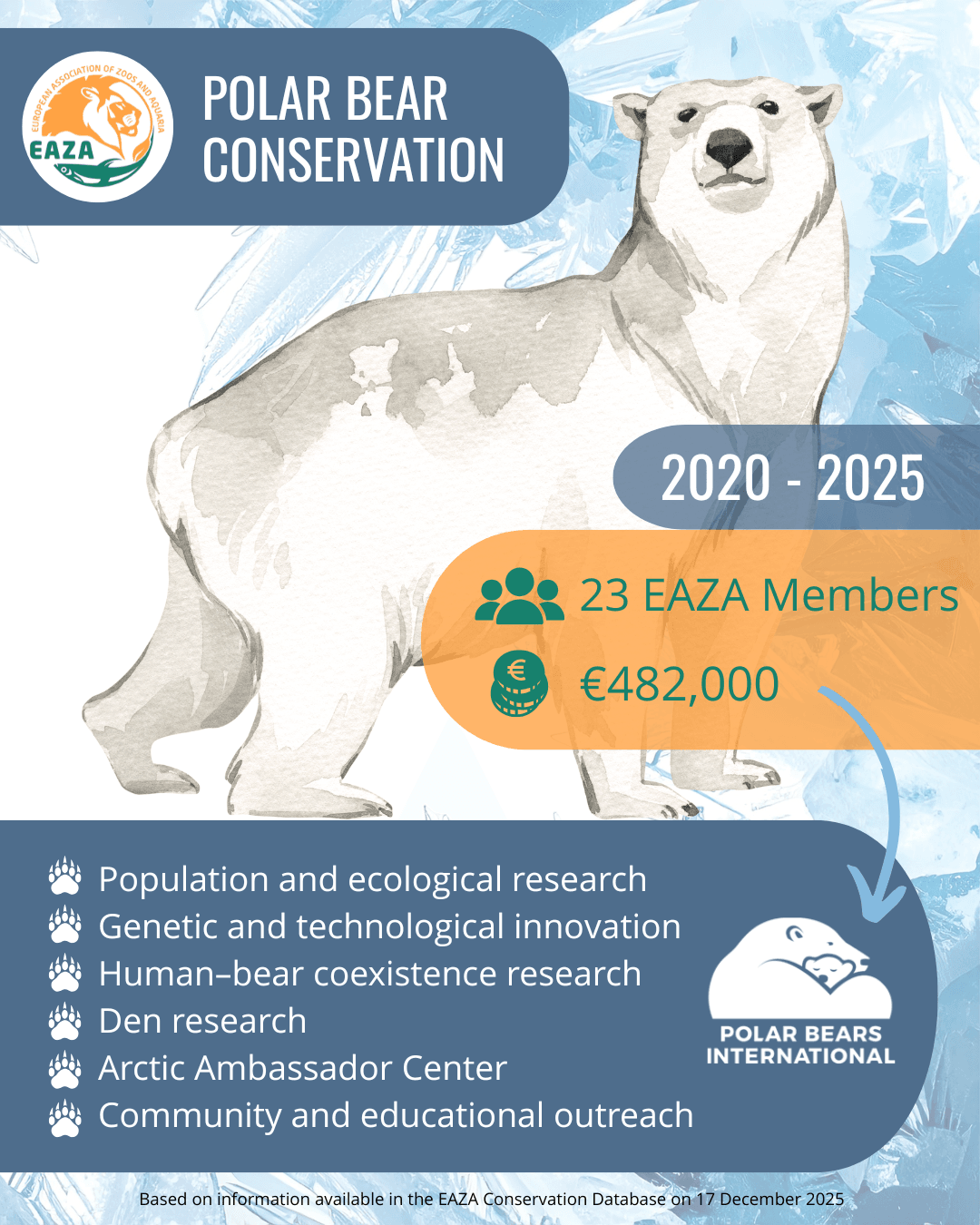
More than 20 EAZA Members partner through PBI’s Arctic Ambassador Centre network, collaborating on research, education, and advocacy to address the pressures polar bears face in a warming Arctic.
Zoos and aquariums also enable research that is difficult or unsafe in the field: the same bears can be observed repeatedly, allowing scientists to collect high-quality physiological and behavioural data. This includes voluntary blood and hair samples to study hormones, diet, and health; development of pregnancy tests; and testing attachment methods for tracking devices before deployment on wild bears. Additionally, zoo partnerships help validate tools used in the Arctic, such as activity sensors, dietary protocols, and metabolism measures.
Supported by PBI, the EAZA Polar Bear Research Prospectus coordinates priorities across institutions, strengthening multi-zoo studies.
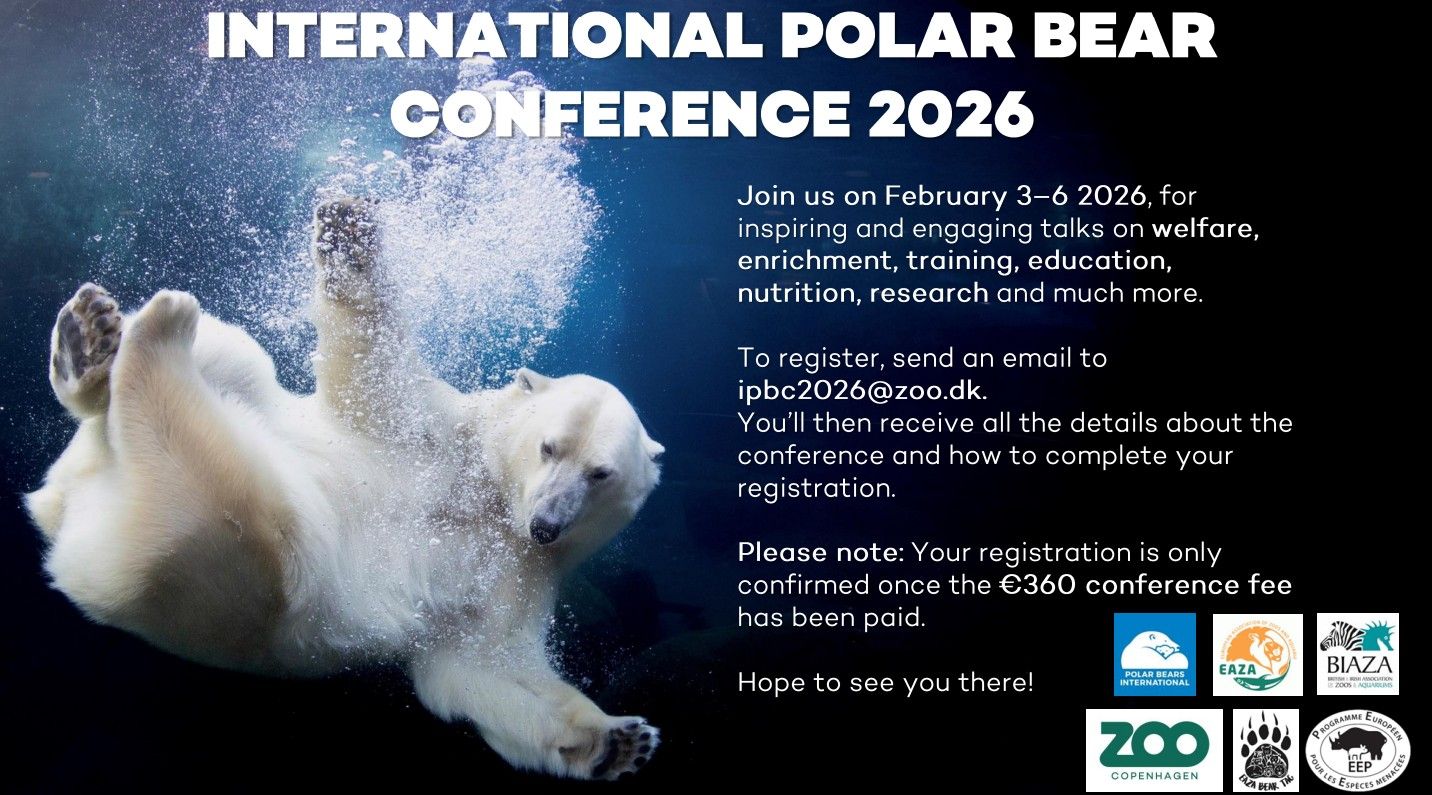
Ex situ and in situ work closes knowledge gaps, improves field methods, and supports evidence-based management for wild polar bear populations. At the upcoming International Polar Bear Conference, hosted by Copenhagen Zoo on 3–6 February 2026, the latest developments will be presented!
Banner picture © José Kok
Blog post by Merel Zimmermann, 6 January 2026