

In Memoriam Leobert (Bert) de Boer (1947-2026)
EAZA joins many from our community in expressing their condolences to Bert de Boer's family and friends.
Goodbye, dear friend!
This tribute was written by Dr Frank Rietkerk, who worked with Bert at the EEP Executive Office and in Apenheul (the Netherlands), and who held many roles in EAZA.
"On Friday 28 November of last year, John de Hoon (Avifauna) and I made our annual trip to Schoonhoven to visit Bert. We always looked rather forward to these visits – it was good to catch up and spend a couple of hours shamelessly dragging up old memories and recounting old stories. The visit had been carefully planned with the help of Bert’s daughter Hanneke – Bert knew we were coming and we knew where to find the key to his house so he did not have to walk all the way to the front door to open it for us.
It was dark when we arrived. We opened the door. Silence. Called his name. No answer.
He was fast asleep but woke up when we went inside, was briefly surprised to see us and then remembered. We got some beers from the fridge and soon we were off, starting with the present and quickly moving into the past. Bert was definitely a bit more fragile than the year before, but his memory was as good as ever.
It was the last time we saw Bert and it was as it should be – good stories, good memories and, as always, his plans for the future. He always had those as well. Amazing.
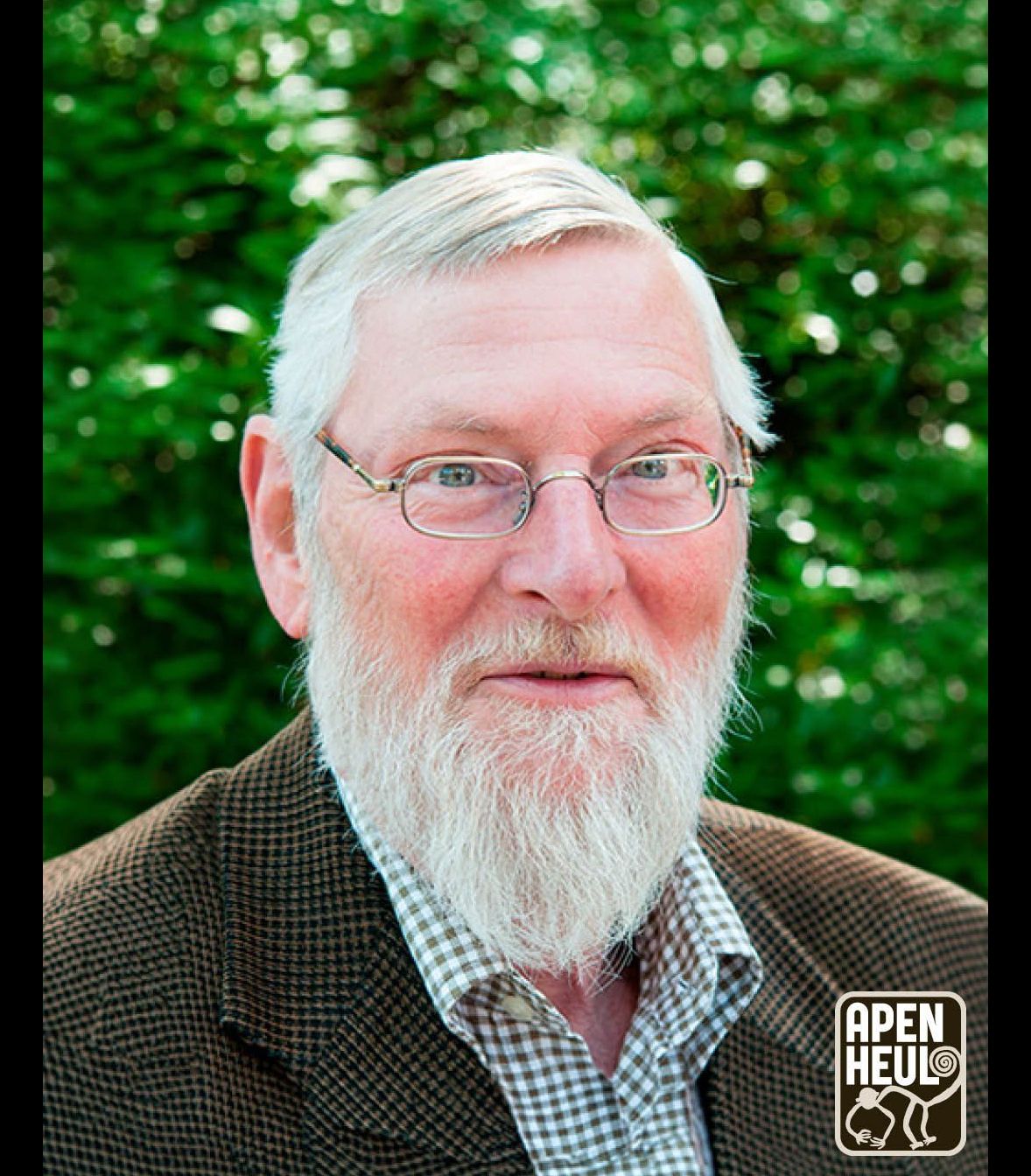
I first met Bert in 1991, during a Captive Breeding Specialist Group (CBSG; former Conservation Planning Specialist Group) meeting in Singapore. At the time, I was working for ZSL as the senior vet at a gazelle breeding and research centre in Saudi Arabia. Bert was director of the National Foundation for Research in Zoological Gardens (NFRZG), a small but fine organisation that he had set up with the Dutch Zoo Federation and with a grant from the Dutch government to carry out research in areas where the Dutch zoos could improve themselves. The bigger and more general aim was to make zoos more relevant in the conservation of nature and more specifically of endangered wildlife. I heard about this other Dutch guy during the conference and about this foundation – it made me very curious and I wanted to know more. Bert proved elusive and when I finally caught up with him, he was practically on his way back to the airport. He had no time, and the fact that I was also Dutch and also trying to be relevant in the conservation of endangered wildlife sadly did not appear to interest him much. It was brief. Two years later, CBSG met in Antwerp. I went. Bert was there. By then I knew a bit more about that foundation and I basically cornered him. We sat down on steps somewhere in front of the zoo and he had time. Four months later, I joined the staff of NFRZG, which later morphed into the EAZA Office. By then, Koen Brouwer had become the director and Bert had moved on to Apenheul, where he developed a new masterplan and then just went on to implement it as well, bringing it into the new century as the modern zoo it is, while maintaining the strengths of the park as it was thought out by its founder Wim Mager.
In 1999, Bert and I met again during the EAZA Annual Conference in Basel. He asked if I had some time... Half a year later, I also left the EAZA Office and joined Bert in Apenheul, as general curator. We spent the next nine years working together very closely until he retired in 2009.
There were pretty tumultuous years. There was always something going on – as it happens in zoos – but at times it seemed as if Apenheul was running a bit faster than many others. Or maybe it was just Bert who was running a bit faster than many others. Anyway, we were still completing the masterplan to make the park more interesting, more beautiful and with more modern conveniences for the visitors, including new areas for primates, new restaurants and a big new office building, the St@art. Apenheul Primate Conservation Trust entered into partnerships with a small number of innovative conservation projects on Borneo, in Madagascar and Peru. And throughout those nine years, we were also negotiating with the municipality about parking, building metres, retail concessions, battling health issues with woolly monkeys and bonobos, foot and mouth... as I said, there was always something going on.
Meanwhile, Bert was Chairman of the Dutch Zoo Federation for years, Chairman of EAZA for years, and as if all that was not enough, Apenheul accepted the invitation of the municipality of Kerkrade to build a new zoo there. In a little more than four years, a bunch of soccer fields, a creek and some forest patches were transformed into GaiaZoo, as it is now known. GaiaZoo was Bert’s ultimate project. It afforded him the opportunity to build a zoo where the interconnectedness of everything in nature was explained. This had been Bert’s mission all along: to save the planet, education and conservation were crucial, and zoos were the perfect place to carry out that message.
Many people asked during those years what it was like to work with Bert. I found him immensely inspiring – he was always busy with new projects, innovating, improving. His head was full of ideas, knowledge and plans – on a given day he would sit down and write for hours and there would be a new forward strategy for EAZA, or the basic plan for a new zoo, or Apenheul’s budget requirements for the next five years with supporting text. He always wanted people – us – to read those documents and give him constructive feedback. Believe me, we tried, but we could not always keep up. Bert was a genius at resolving complex issues in his head and then presenting a solution with all angles covered. Not everyone always agreed, but most people had great respect for the quiet, logical and methodical way he continued to work on his mission – strengthening the role of zoos in nature education and conservation. He always knew exactly where he wanted to go, first with NFRZG, then EAZA, Apenheul and finally GaiaZoo, and was able to communicate this clearly and with conviction.
When it mattered, he could take a step back and engage with people on a personal level. The first 15 years of EAZA had a few moments where the future of the organisation was not altogether certain. Bert would call and travel and meet with people in order to keep it all together. He was good at that. He was also amazingly good with children. When my son was 6 or 7 years old, he bounced into the office one day, after having been to see the squirrel monkeys. He found Bert and me, and immediately started firing off a whole bunch of questions about monkeys. Bert listened, shoved his paperwork aside and then started telling Bastiaan about monkeys. Just some nice little stories. Bastiaan was enthralled and later made a drawing at school with some trees, some monkeys and a figure with a beard and glasses – and wrote “Bert is lief” - kind / affectionate in Dutch - on top of the drawing.
Bert could be “lief”. Not enough people saw that side of him. He only showed it to people he trusted and felt safe with. I cherished the morning coffee moments when Bert was in Apenheul in between his many trips to Kerkrade, where we would just hang out and talk about everything; Apenheul, EAZA, orangutans, raising children and whatever else was there. He had a big impact on my life and on the lives of many of us. It is quite likely that you would not today be reading this blog post as a Member of this great, big and wonderful community that is EAZA as it is now, if it had not been for Bert.
The Dutch Council for Animal Welfare (Raad voor Dierenaangelegenheden) recently published an opinion on the zoos of the future for the government. The preparation for the opinion included a survey among thousands of people in The Netherlands. We needed to know how they felt about zoos and how they saw the future. The great majority answered that they thought zoos were relevant and that conservation, education – as well as animal welfare - were the most important issues. Bert’s mission. Accomplished.
Just before John and I left Bert on 28 November, he told us about his latest endeavour – an autobiography. He was about halfway but expressed some concern about being able to complete it.
Sadly, he did not. But his legacy is very much alive."
Bert de Boer was one of the fathers of modern zoo population management, and of small population management in general. He was a visionary in zoo design and in exploring exciting new husbandry and zoo landscaping concepts, particularly for primates at Apenheul, where he was director between 1997 and 2009, and at his brainchild, GaiaPark in Kerkrade. Bert was also one of the giants of EAZA. He became the first director of the EEP Executive Office in Amsterdam in 1990 (precursor of the EAZA Executive Office, as it is now called), and he was one of my predecessors as EAZA Chair, the sixth Chair of the Association between 2003 and 2009. I will always remember some of his excellent and witty speeches during that time. He will be greatly missed by the EAZA community.
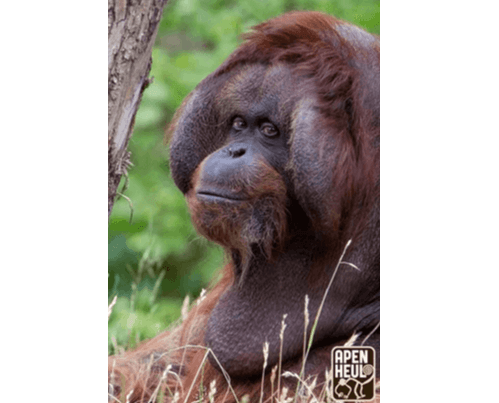
As head of research at Rotterdam Zoo in the 1980s, Bert studied the genetic diversity of primates including orangutan. He also published a book title ‘The Orang Utan: Its Biology and Conservation’. As Director of Apenheul, he built and opened a modern new enclosure for orangutans in the early 2000s.
Bert was EAZA Chairman and persuaded me to become Vice Chair, though I hadn't thought through the implication that I would become the next Chair! The rest is history. He was the cleverest person I ever worked with, a real visionary in our history. Much of the structure and systems we now have were based on his thoughts and plans. He was almost a caricature, stern, dour, high work ethic Dutchman, who didn't suffer fools very gladly; but he had a mischievous sense of humour and was very loyal and supportive to the teams he built around him. We owe him a lot.
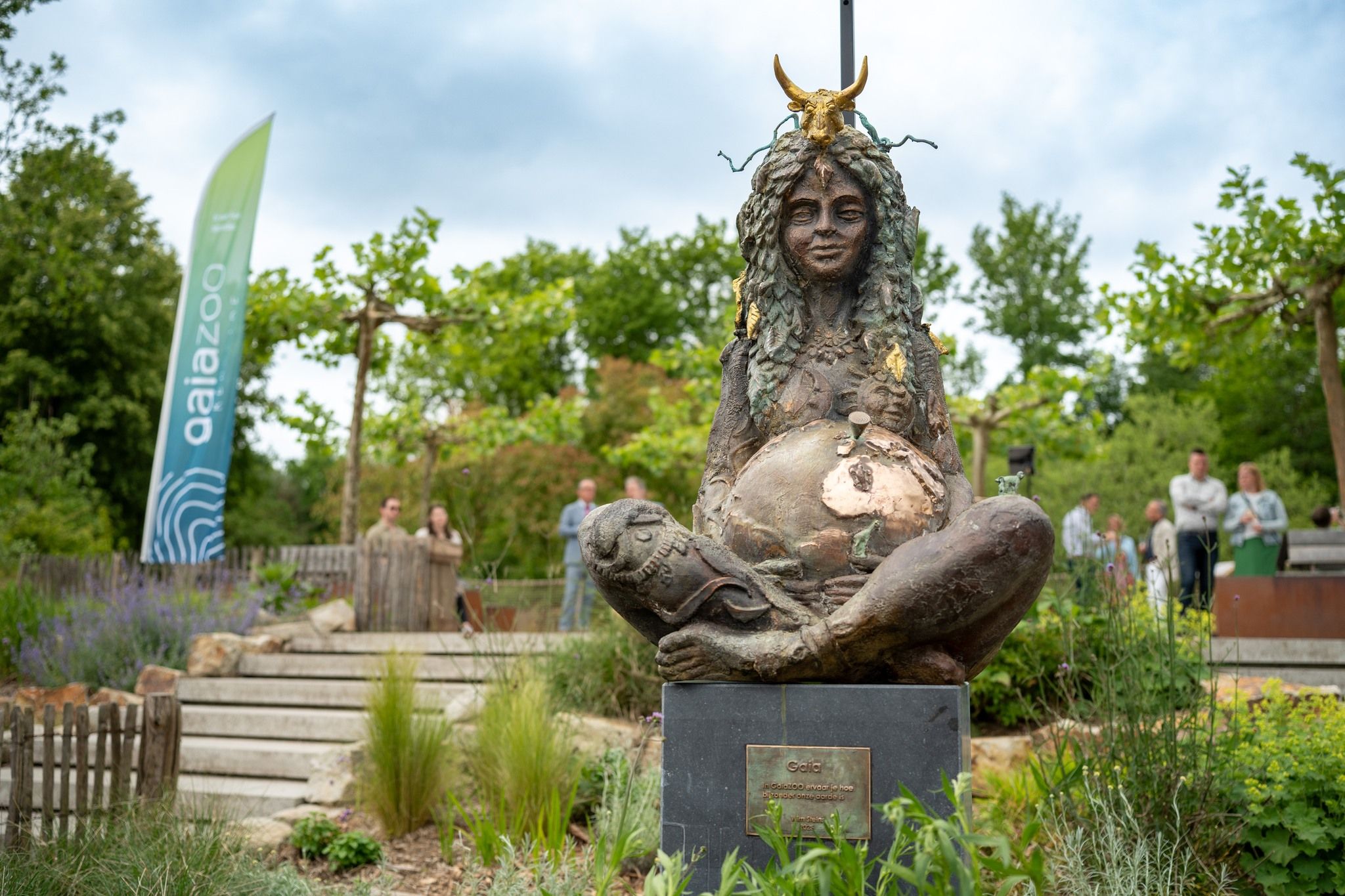
This artwork, received for the 20th anniversary of GaiaZoo, symbolises the Gaia theory, viewing the entire Earth as one coherent organism. Bert shared that view when he developed GaiaZoo in 2005 © GaiaZoo
Bert de Boer was my first ever Chair when I became a Director and I feel lucky and privileged in having had his wise counsel in that first year of my EAZA tenure - his last year as Chairman. Bert was a perfect blend of intellectual curiosity and tenacity whilst at the same time wanting to make real practical change and progress. Strategic, smart, but pragmatic. He did not blindly defend the concept of zoos, instead he interrogated his own perceptions and biases, a rare skill. What can we improve? How can we be better?
Where can EAZA make a more impactful contribution? He was a gifted orator and his opening speeches at the EAZA Annual Conference were always thought provoking, and, if we are honest, sometimes infuriating for some. However, he didn’t provoke needlessly, but to advance our thinking, to make us all question more deeply. His quiet sense of humour also shone through as I got to know him, but still there were surprises. When first appointed to work in Amsterdam, I had travelled to Apenheul for a meeting with Bert. I mentioned I would try and learn Dutch. He looked at me gnomically, a quizzical tilt of the head, and said ‘why, we all speak English, you will be far too busy to do that’. At that moment I knew I would be working with a most practical man! I also well remember attending his retirement party and being mesmerised to see a beautiful motorbike was his leaving gift, having never known he was a ‘biker’.
His giant impact on EAZA, creating the building blocks of the organisation we know today, will be his legacy, his form of immortality. Go well Bert, you made me, and many others, a better, more strategic thinker, and I thank you for the support you gave so generously to so many of us.
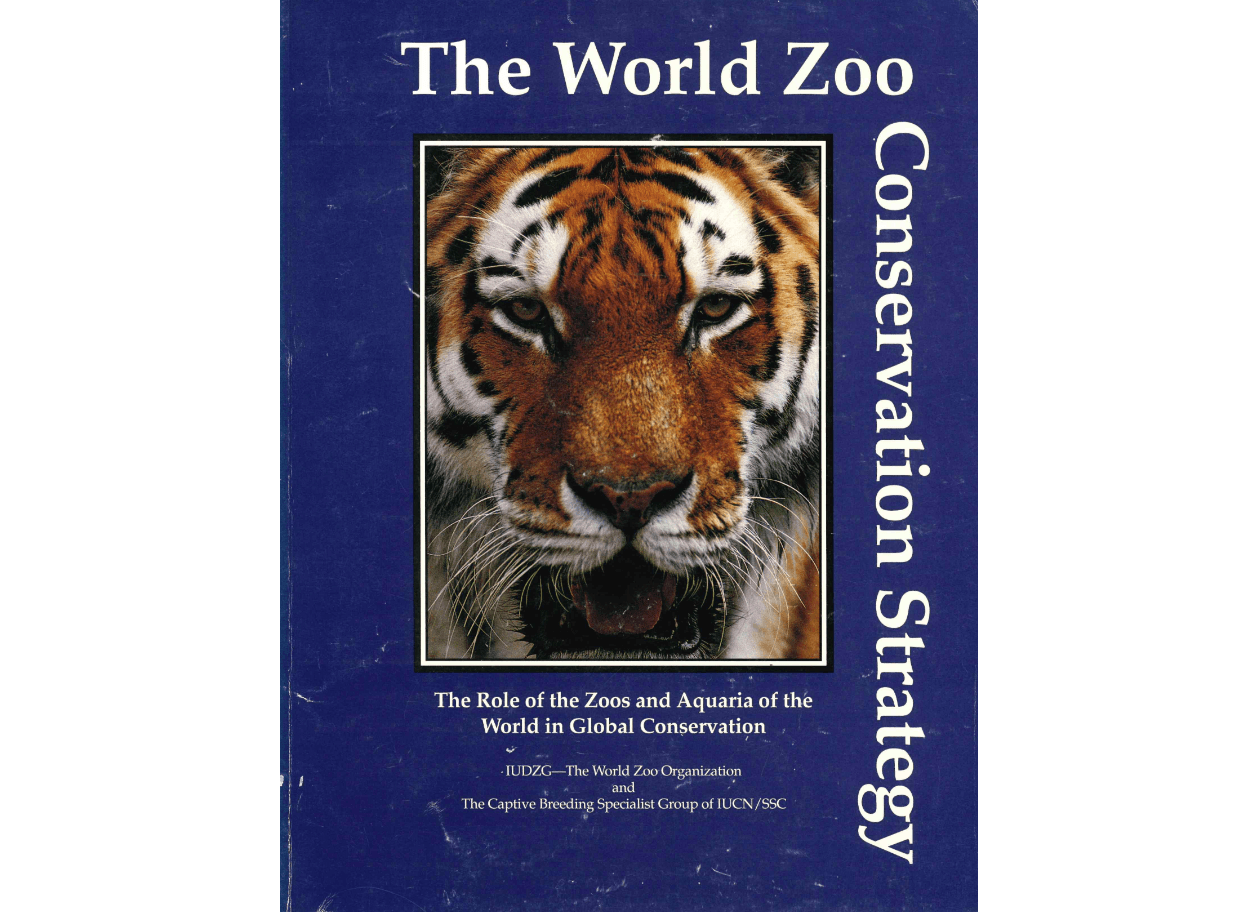
Bert drafted the first ‘World Zoo Conservation Strategy’, the predecessor of WAZA’s present ‘Building a future for Wildlife – The World Zoo and Aquarium Conservation Strategy’ .
Text by Frank Rietkerk. Quotes from Christoph Schwitzer, Simon Tonge and Lesley Dickie; published on 8 April 2026
Cover picture: Bert de Boer speaking at the EAZA Annual Conference in Copenhagen © Michael Petersen, Copenhagen Zoo; Other pictures © Apenheul